01
New Decks, Repairs and Replacements From Deck Builders in Kansas City
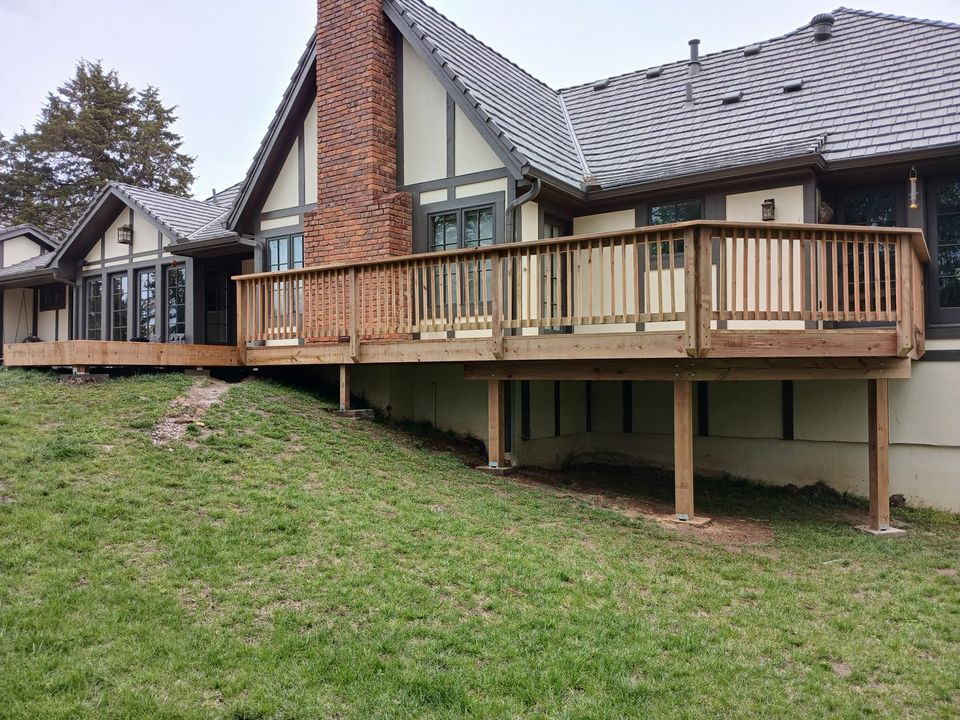
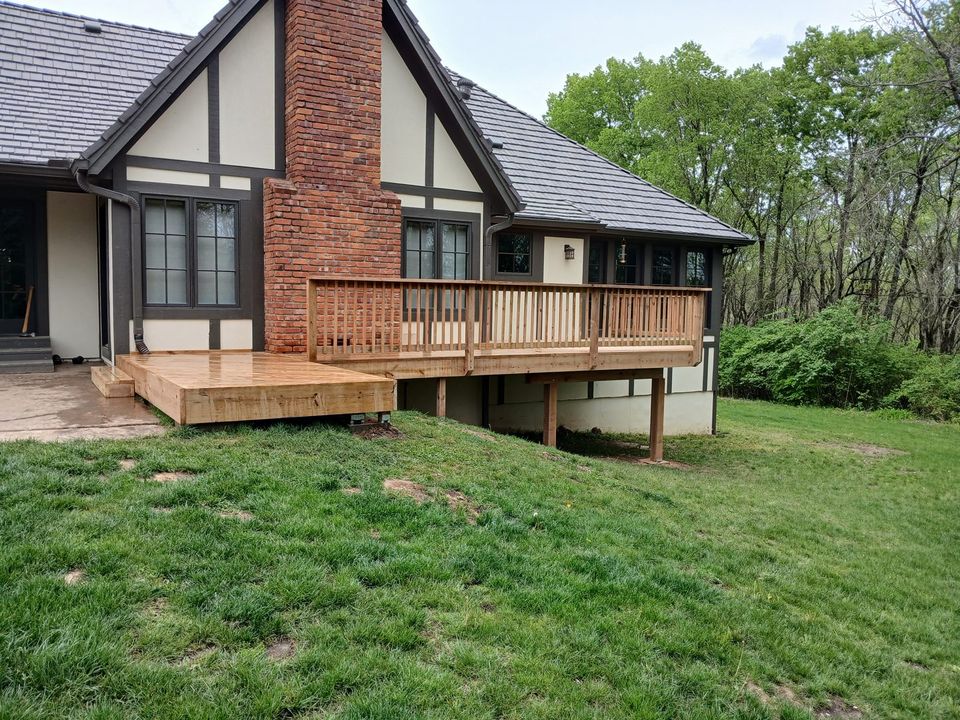
As deck builders in Kansas City, we center our work on three kinds of projects. New deck construction starts from bare ground, with footings below the frost line, framing sized for the deck's height and spans, and stairs and railings built to the dimensions the city enforces. Deck repair fixes specific damage on a deck worth keeping, such as a soft board, a loose railing post or a decayed joist end, along with the water or connection problem that caused it. Deck replacement takes down a deck whose frame, footings or house connection has failed and rebuilds it to current code.
We build all three in wood or composite, and the choice affects the frame as well as the surface, because composite boards need closer joist spacing than many older wood decks were built with.
On an existing deck, the condition of the frame decides which service fits. Gray, splintered boards often sit on joists, beams and footings that are sound, and that deck may only need resurfacing. A freshly stained deck can hide rot along the ledger or at the base of the posts. Because the surface misleads in both directions, we look at the structure before recommending a service. A sound deck that's too small is a candidate for expansion, and our deck builder page compares all five deck services side by side.
02
Covered Decks, Porches, Gazebos and Other Outdoor Construction in Kansas City
Many projects add a structure to the deck or stand beside it, and each one changes what the frame and footings have to carry:
- Covered decks
- a roof over a new or existing deck, with the posts, beams and footings sized for the weight the roof and its snow load add.
- Screened porches
- a roofed room with screen walls, built new or on an existing deck, with the floor, roof and screens planned together.
- Porches
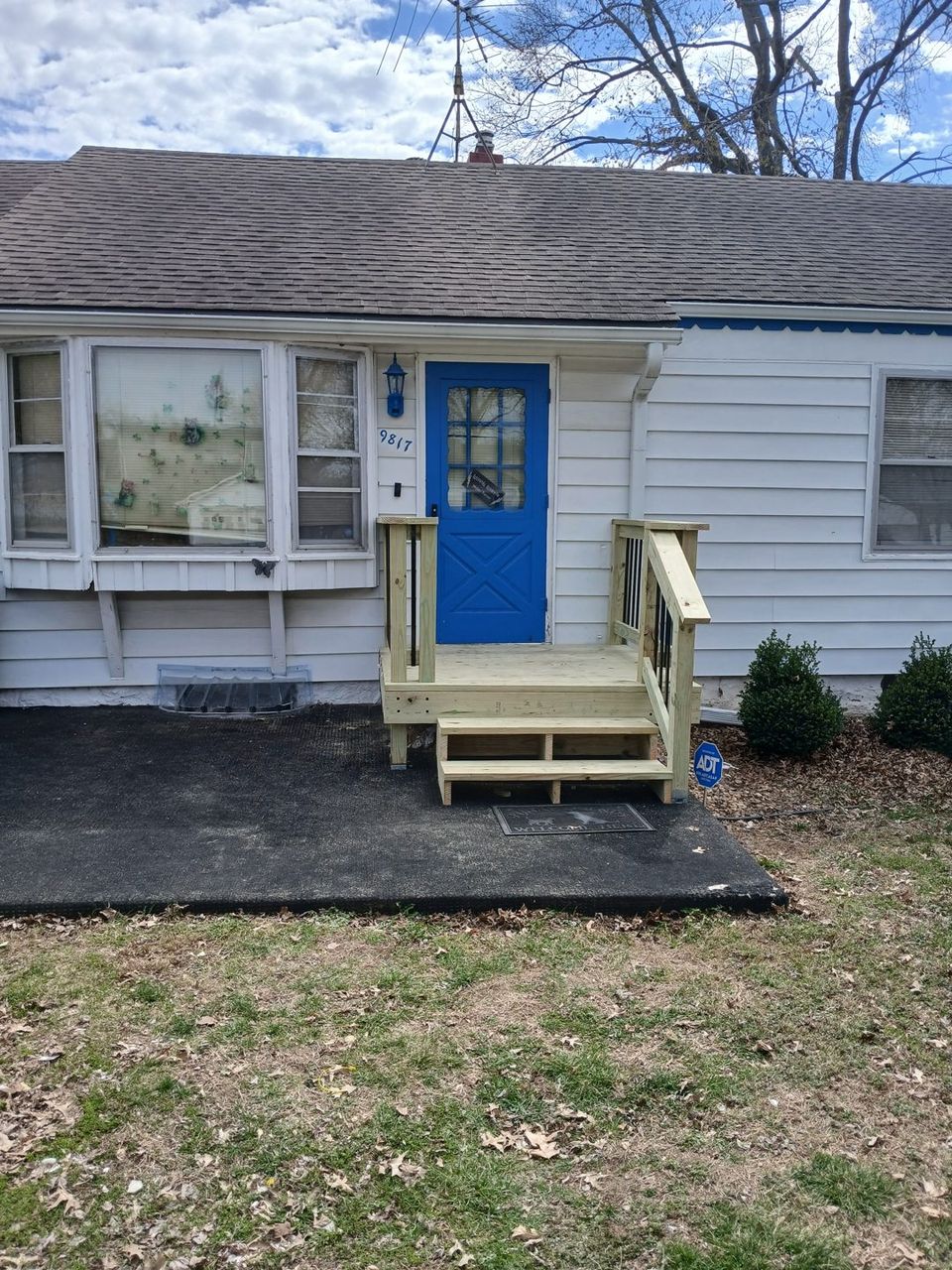
- front and back porches framed on frost-depth footings, with the landing and steps laid out from the door they serve.
- Patios and low decks
- ground-level and low decks for yards where a patio is the first idea. The height of the door above the yard, the slope and where rain runs decide which structure fits.
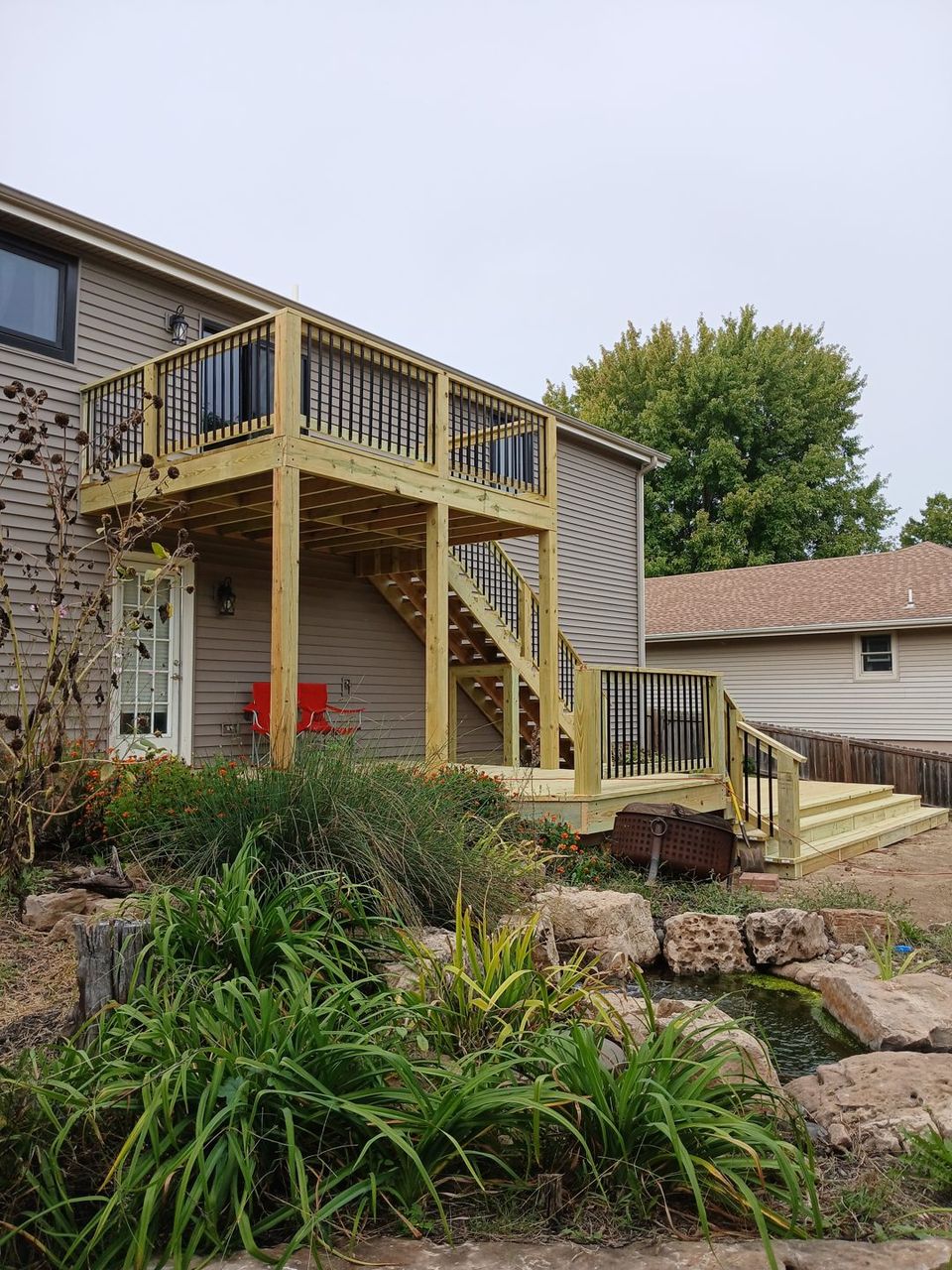
Railings and stairs can also be their own projects when the rest of a deck is staying. Railing installation covers guard heights and how railing posts are fastened to the frame, and stair installation covers rise, run, stringers and landings. The general contractor, carpenter and gazebo builder overview pages group these services, and the services directory lists all fifteen on one page.
04
Deck Builders for Kansas City, Overland Park and Eight Other Communities
We work in ten communities: Belton, Grain Valley, Harrisonville, Kansas City, Smithville and St. Joseph in Missouri, and Lawrence, Leavenworth, Olathe and Overland Park in Kansas. The construction is the same in each, but the rules around it are set locally.
Permit thresholds are the clearest example. Kansas City, Missouri exempts a deck from a building permit only when it is no more than 30 inches above grade at any point and isn't over a basement or a story below. Overland Park and Olathe exempt only small, low decks that are detached from the house and don't serve the required exit door, and St. Joseph's local amendments delete the residential code's list of permit exemptions entirely. Footing depth varies as well. Most of the cities we serve set the frost line at 36 inches, while Lawrence's adopted code sets it at 30.
Licensing and jurisdiction follow the same pattern. Overland Park and Olathe issue deck permits only to contractors with an active Johnson County contractor's license, while Kansas City, Missouri licenses residential building contractors through its own planning department. A mailing address doesn't always settle which rules apply, because a "Kansas City, MO" address can sit in a neighboring city with its own building department, and land just outside Harrisonville's city limits falls under Cass County instead. Each service area page covers one community's permits, code details and inspections.
05
What Makes a Deck Last in the Kansas City Climate
Most of what decides how a deck holds up is hidden once the boards are down. Footings that stop short of the frost line get lifted as the soil freezes and thaws, which is a common reason older decks lean or pull away from the house. A ledger without working flashing lets water run behind it, so it rots from the back, often along with the house's rim joist. Wood posts decay fastest just below the soil or concrete line, where a post can be soft while it still looks sound.
The parts people touch come next. A railing's strength comes from posts fastened into the framing with hardware, not from the balusters between them. Stairs depend on evenly sized steps and on two connections: where the stringers attach at the top and what they rest on at the bottom. Underneath all of it, pressure-treated lumber has to be rated for its exposure, with ground-contact lumber near the soil and fasteners compatible with the treatment.