New Deck Construction
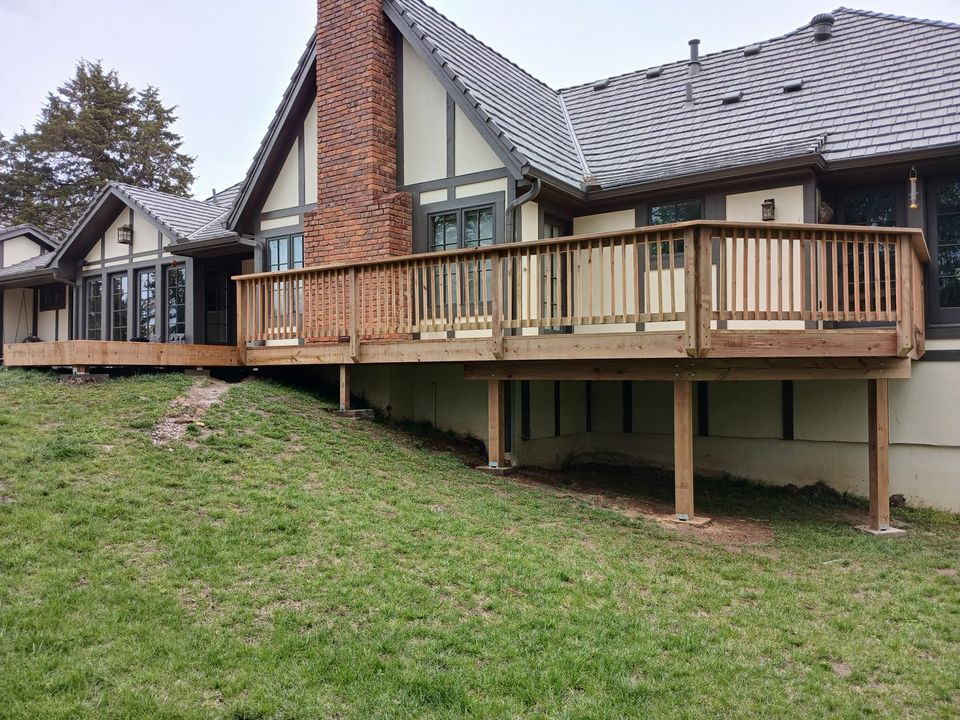
Wood and composite decks built on new footings and framing, designed around your house.
View service : New Deck Construction
KC Deck Builds · Kansas City metro
New decks, repairs, replacements, resurfacing and expansions in wood or composite, built to the code each city in the metro enforces.
Wood and composite decks built on new footings and framing, designed around your house.
View service : New Deck ConstructionComposite boards installed on a frame spaced, gapped and ventilated to the board manufacturer's instructions.
View service : Composite Deck InstallationWood decks built with lumber rated for each part, hardware matched to the wood, and a finish plan from the first board.
View service : Wood Deck ConstructionDeck replacement from the footings to the railings, built to the code your city enforces today.
View service : Deck ReplacementNew decking, fascia and stair treads installed on an existing frame that has been tested for condition, level and joist spacing.
View service : Deck ResurfacingAdditions that bring more space, a second level or new stairs to an existing deck, with the new section framed and supported to current code.
View service : Deck ExpansionRepairs to deck boards, framing, posts, railings and stairs, with each fix aimed at the cause of the damage.
View service : Deck RepairMost deck projects turn on one question: how much of the structure under your feet is sound enough to keep. The answer decides which service fits, what the estimate should cover and whether the city needs to review the work.
We build new decks and repair, replace, resurface and expand existing ones. KC Deck Builds is a locally owned, licensed and insured deck builder serving the Kansas City metro.
If there's no deck yet, the project is new deck construction, and every part of it is designed from the footings up. If a deck is already there, the frame decides the service, not the boards. The joists, beams, posts, footings and the connection to the house carry the load, and their condition sets how much of the old deck can stay.
The surface can mislead in both directions. Gray, weathered boards often sit on a frame that's fine, while freshly stained boards can hide rot along the ledger or at the base of the posts. That's why we look at the structure before recommending a service. Stairs and railings can also be rebuilt on their own when the rest of the deck is staying, which our stair and railing pages explain.
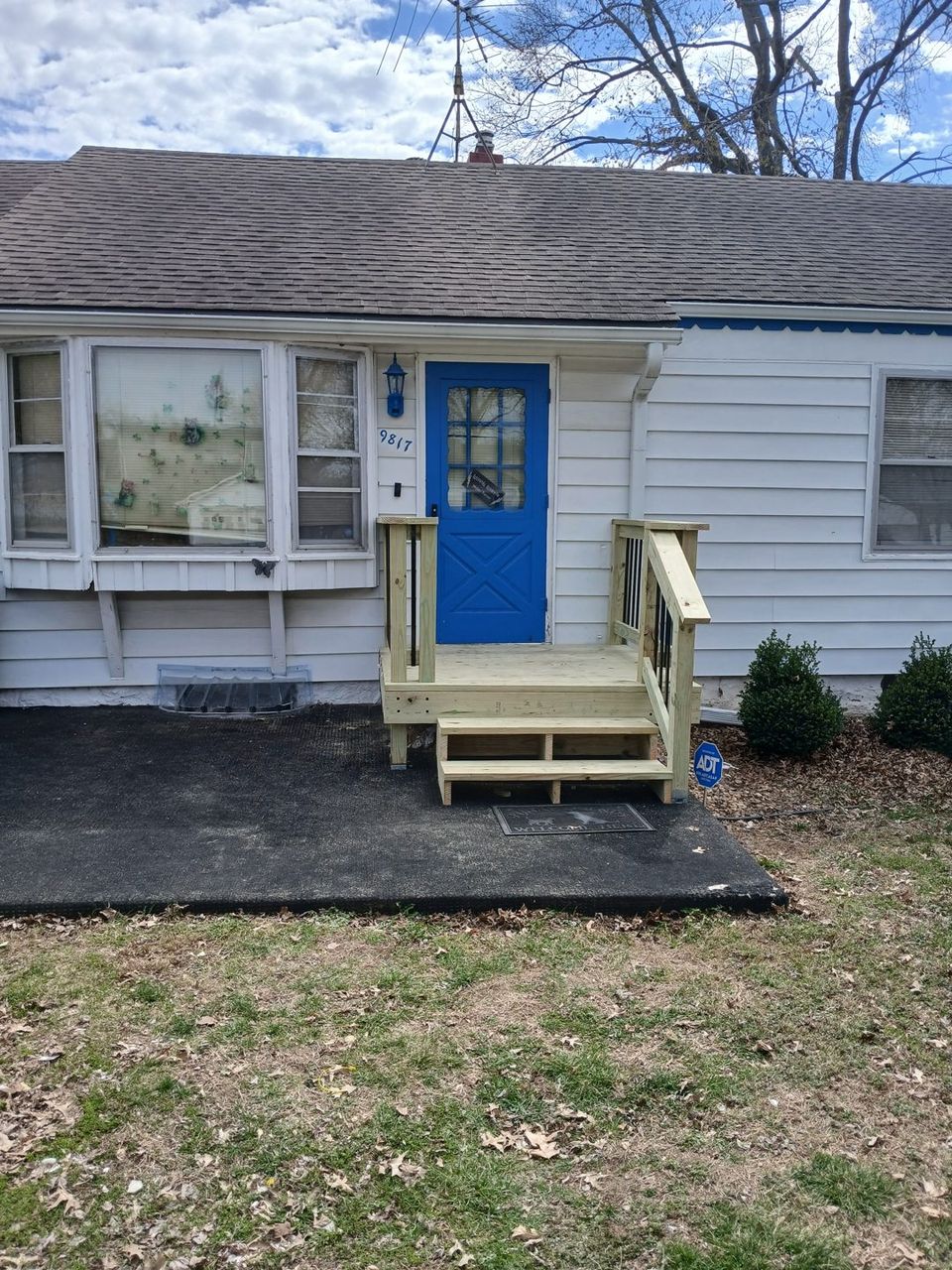
Material is usually the second decision after the structure, and it affects the frame as well as the look. Wood decks are built with pressure-treated lumber or cedar. They need a finish plan and regular care, and that page covers which lumber belongs where and how to maintain it. Composite decking resists rot and doesn't need staining, but the boards aren't structural. They depend on a frame built to the board manufacturer's spacing and gapping instructions, which the building code makes a requirement.
That difference matters most when an existing deck is being resurfaced. A frame built years ago for thick wood boards may have joists spaced too far apart for most composite, so switching materials can mean adding framing before any new boards go down.
Contractor licensing in this metro is set by cities and counties, so the rules change at the state line and sometimes at the city limits. On the Kansas side, Overland Park issues building permits only to contractors with an active Johnson County contractor's license of the type that matches the permit, and Olathe's adopted code also requires a Johnson County license for permitted work. That means deck builders in Overland Park and Olathe have to be listed in the county's licensing system before the city will issue a permit in their name. Homeowners acting as their own contractor in Overland Park don't need a license, but any subcontractors they hire do.
Kansas City, Missouri licenses contractors through its own City Planning and Development department, with separate licenses by trade. Its code requires a residential building contractor license to contract to construct, structurally alter or enlarge a one- or two-family home, and electrical, plumbing and mechanical work each require their own license. Smaller cities add their own rules. Smithville, for example, requires a contractor occupation license from the city.
The Attorney General's guidance recommends at least three written estimates based on the same work, and a contract that states exactly what will be done, the quality of the materials, the names of any subcontractors, the total price and the payment schedule. For a deck, "the same work" is harder to pin down than it sounds, because two estimates for "fixing the deck" can describe a repair and a full replacement.
A complete deck estimate makes the scope comparable by naming what happens to each part of the structure:
When one estimate leaves out the footings or the ledger, its lower total usually reflects less work rather than a better price for the same deck.
Problems homeowners report with deck contractors tend to follow a few patterns: a permit that was promised and never pulled, a deposit taken for work that never finished, or payment made before anyone knew the work was wrong. A few checks before signing address each of them.
A qualified builder can explain how your deck will be supported and attached before any digging starts, and the explanation should match what's in the estimate. Their license should be the right type for your city, and on the Kansas side their name should be the one on the permit. Changes in scope, such as rot found behind a ledger, should be written down and agreed before the added work is done, not discovered on the final invoice.
Payment terms are the other safeguard. The Kansas Attorney General advises against paying for an entire job up front, and against making the final payment or signing a final release until the work is complete and the subcontractors and suppliers have been paid. The same guidance lists warning signs worth knowing: a contractor who comes door to door, pressure for an immediate decision, a price far out of line with other estimates, or leftover material from another job offered at a discount.
Permit thresholds differ across the ten cities we serve, so the address matters more than the size of the deck. Kansas City, Missouri exempts decks no more than 30 inches above grade at any point that aren't over a basement or a story below. Overland Park requires a permit to build or replace a deck, with a narrow exemption for small, low, detached decks, and it doesn't require one to repair the walking surface, guards or handrails. Olathe's exemption also applies only to small, low decks that aren't attached to the house. Grain Valley requires a permit for any deck more than 30 inches above grade and for any deck attached to a house, at any height.
Construction rules shift too. Kansas City, Missouri, Olathe and Overland Park set footing depth at 36 inches, while Lawrence's adopted code sets its frost depth at 30 inches. Replacements and expansions are more likely to need a permit than board repairs, because they create new structure. Our service area pages cover the rules for Belton, Grain Valley, Harrisonville, Kansas City, Lawrence, Leavenworth, Olathe, Overland Park, Smithville and St. Joseph.
Get a deck estimate
In practice, yes. Both terms describe a company that designs and builds decks, and both are used for firms that also repair and replace them. The name matters less than the license the company holds for your city, the insurance it carries and whether its estimate spells out the structure as well as the surface.
It depends on the city. In Overland Park, a homeowner can act as their own contractor on their own home, but any subcontractor they hire still needs an active Johnson County license. Kansas City, Missouri's owner exception is narrower: it applies to an owner-occupied single-family home where the owner and immediate relatives buy the materials and do the labor themselves.
A general contractor coordinates many trades, often for interior remodeling and room additions. A deck specialist focuses on the structure outside the house: footings, framing, decking, stairs and railings. Our general contractor page covers the covered decks, porches and other outdoor structures we build, and when a project needs a general contractor instead.
Get an estimate
Call or send a request for an estimate. Choose the service you need from the list below.
(913) 687-7031 ↗︎Prefer to talk it through? Give us a call.